Recycling 18650 Lithium cells

I tore down another 21 laptop batteries, so I have about 200 cells now. If they each could deliver 1000 mAh, I guesstimated there’s enough energy to:
Boil 1L of water.
Run a fridge for 1/5 of a day.
Cook a whole chicken.
Keep a cell phone charged for 60 hours.

Lithium ion 18650 cells usually have more than 1000 mAh capacity. If I had 1000 batteries things start to get serious, because I could entertain the idea of running some appliances entirely from solar or wind energy. The key with batteries is to avoid deep discharge cycles.

This project is more for fun and learning rather than money. If it broke even I would consider it a success. But, maybe if my setup lasts long enough it could save some money. I’m only $80 deep so far. With what we pay for electricity in this province, and how it’s increasing every year, maybe this is the right path for me.

At this stage I need to work on testing the batteries and building charge and discharge circuits. I plan to design and build everything myself to better my skills as an electrical engineer.

CubeSat patch antenna

Can you spot the difference? I had made several mistakes measuring 0.3 up to 1mm. These antennas were made on a precision mill able to place a 0.254mm bit down to the 0.0254mm. Needless to say my mistakes were way outside of tolerance… Thankfully our technicians are forgiving and kind!

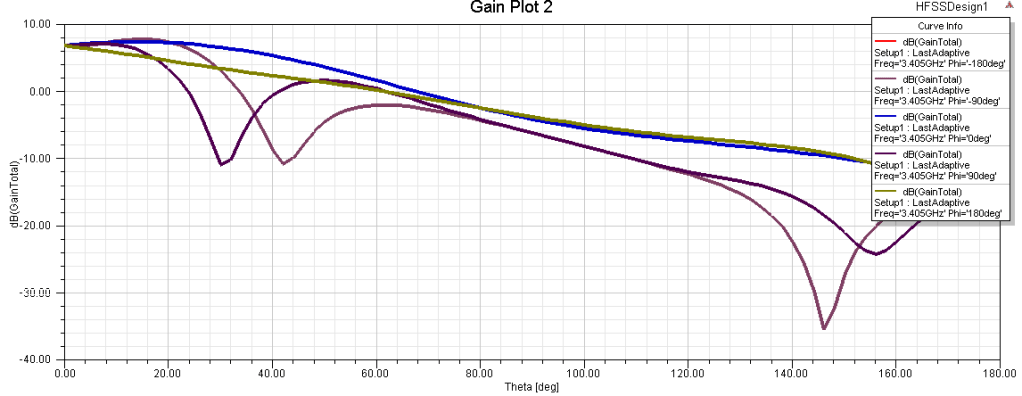
This patch antenna works at 3.4 GHz and uses sequentially rotated feed to achieve circular polarization.

The power of SDR

Recently consumer grade software defined radios have become available, largely because of a few IC’s offered by Lime Microsystems, Analog Devices. There are other offerings from Texas Instruments and Maxim Integrated, but I have yet to see many products with these chips available for the public.

At the low cost end there are the TV tuner dongles which can act as SDR receivers. Notably Nooelec and RTL-SDR blog have great offerings. You can go from knowing nothing to receiving images from weather satellites for the cost of eating at a restaurant.

These receivers cover the GNSS spectrum and recently a few chunks of code have surfaced on github.

GNSS_SWRX_NOOELEC_SDR from user pdblunt

gnss-sdr from user gnss-sdr

Since I know patch antenna design, and LNA MMICs are now cheap and easy to find in the right spectrum, I would like to develop a kit for this kind of activity. It would be cool and lower cost than a lot of commercial GPS solutions.

Another nice touch is that if the code is portable, any fully fledged SDR system such as one using HackRF (or even better a USRP device) can integrate GPS receiving with just an antenna switch and active antenna.

Image and caption from: https://gnss-sdr.org/conf/

That’s the power of SDR, the ability to have a flexible transceiver that does a bunch of different things.

With the onward and upward march of battery technology and efficient, performant SOCs, SDRs have complimentary technology that will totally change the paradigm for wireless communication systems.

A 3.4 GHz antenna for satellite communication

Patch antennas are really great. They can achieve high gain in arrays, and also CP using a variety of techniques. One is sequential rotation, where array elements are rotated and phase shifted to follow the polarization of the EM wave.

One area where CP is important is satellite communication, because the orientation of the satellite relative to ground station is difficult to ascertain and control. It is simpler to use RHCP or LHCP to avoid polarization loss. This patch antenna is designed for 3.4 GHz and can fit on a 2U or 3U CubeSat.

The Journey Begins

Thanks for joining me!

Good company in a journey makes the way seem shorter. — Izaak Walton

post

When you are a Bear of Very Little Brain, and you Think of Things, you find sometimes that a Thing which seemed very Thingish inside you is quite different when it gets out into the open and has other people looking at it.

A. A. Milne